Warning Signs Your Brakes Need Repair or Replacing
Maintaining a reliable braking system stands as the single most critical active safety measure for every driver operating a motor vehicle. Every time you depress the brake pedal, complex hydraulic mechanisms generate immense mechanical friction, converting kinetic energy into thermal energy to bring several thousand pounds of metal, glass, and rubber to a safe, controlled stop. Modern automobiles rely on an intricate assembly of components—including friction pads, metal rotors, hydraulic calipers, flexible brake lines, and master cylinders—working in perfect synchronization. However, every stop creates microscopic wear across friction surfaces, gradually thinning pad material, scouring smooth metal rotors, and breaking down hydraulic fluid over thousands of driving cycles.
Ignoring subtle physical warnings or delaying routine mechanical inspections quickly transforms minor pad wear into severe, dangerous component failures. Driving with compromised braking components drastically increases stopping distances, reduces pedal responsiveness, and risks total hydraulic pressure loss during high-speed emergency maneuvers. Furthermore, neglecting initial warning signs leads to cascading mechanical damage, where worn-out friction pads grind directly into solid metal rotors, destroying delicate caliper pistons and turning an affordable, routine service into an extensive, costly overhaul. Exploring key warning indicators—such as high-pitched squealing, harsh metal grinding, steering wheel vibrations, soft pedal feedback, vehicle pulling, and dashboard indicator lights—reveals how timely attention preserves road safety, protects vehicle equity, and ensures total driving confidence.
Listening for High-Pitched Squealing and Squeaking Noises
Listening carefully to subtle auditory feedback during routine stopping provides an early warning regarding pad thickness levels. Brake pad manufacturers embed small, metallic wear indicators—often called acoustic wear sensors—directly into the friction material. As the friction lining wears down close to its minimum safe thickness, this hardened metal tab contacts the rotating metal disc, producing a high-pitched, persistent squealing or chirping sound every time you apply pressure to the pedal.
Ignoring this squealing noise allows the remaining friction layer to wear away completely, leading to severe metal-on-metal contact that damages surrounding components. While occasional morning squeaks caused by light surface rust or moisture buildup can occur after damp weather, continuous squealing during normal driving demands immediate mechanical attention. Scheduling timely brake repairs allows technicians to swap out thin friction pads before bare metal backing plates score and ruin expensive metal rotors.
Detecting Harsh Metal Grinding and Deep Rotor Scouring
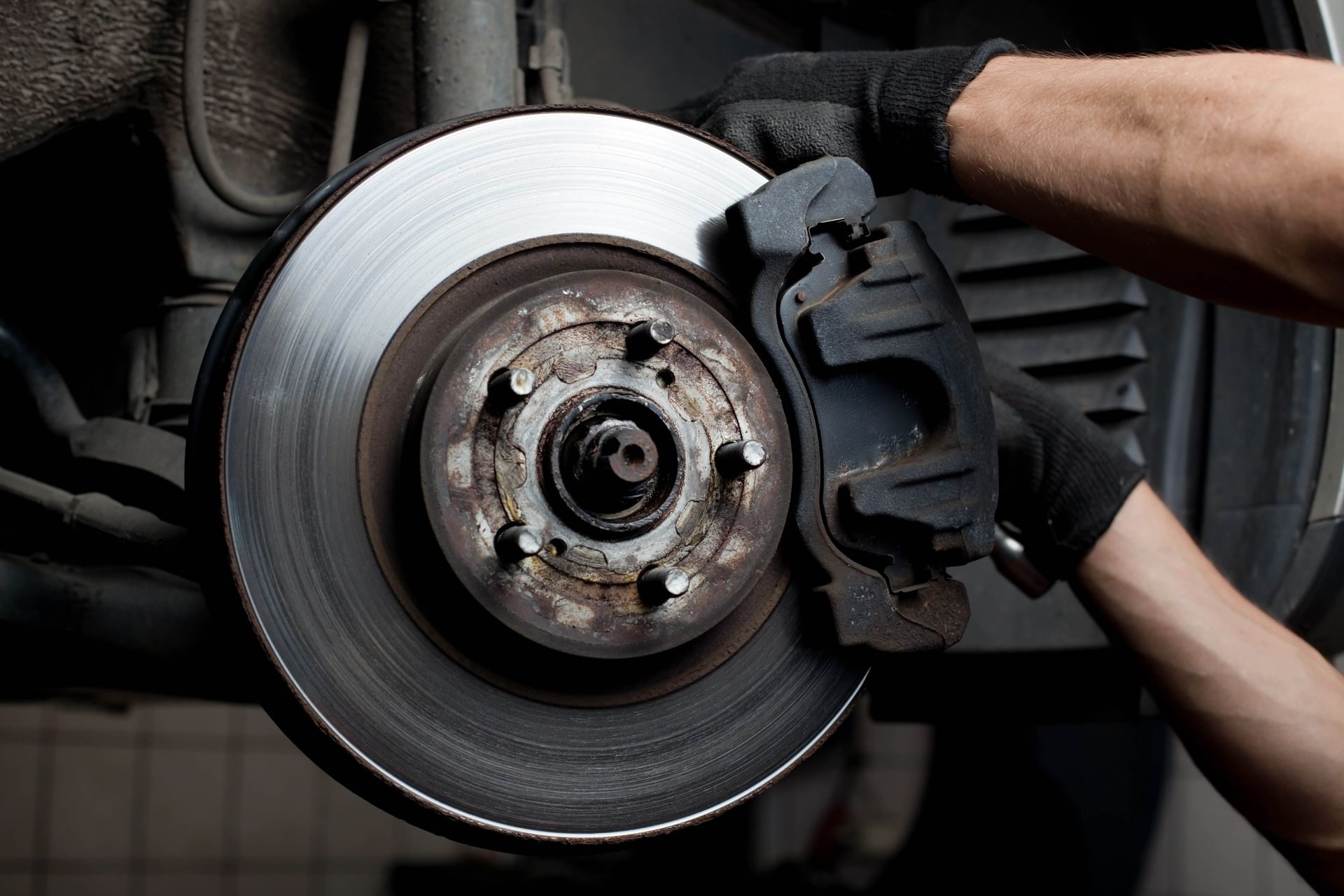
Detecting a deep, harsh metallic grinding or growling sound indicates that friction pads have worn down completely to their steel backing plates. At this advanced stage of mechanical deterioration, bare steel plates press directly against rotating metal discs every time the pedal is engaged. This metal-on-metal friction generates extreme thermal buildup, gouging deep circular grooves into smooth rotor surfaces and severely compromising total stopping power.
Driving a vehicle under metal-on-metal grinding conditions presents extreme safety hazards, as thermal friction degrades stopping efficiency and risks fusing pad backing plates directly to rotor surfaces. Furthermore, extreme heat can melt rubber caliper seals, causing hydraulic fluid leaks and complete hydraulic system failure. Seeking immediate brake repairs when grinding occurs is essential for replacing scoured rotors, rebuilding damaged calipers, and restoring safe, predictable stopping distances.
Feeling Steering Wheel Vibrations and Pulsating Pedal Feedback
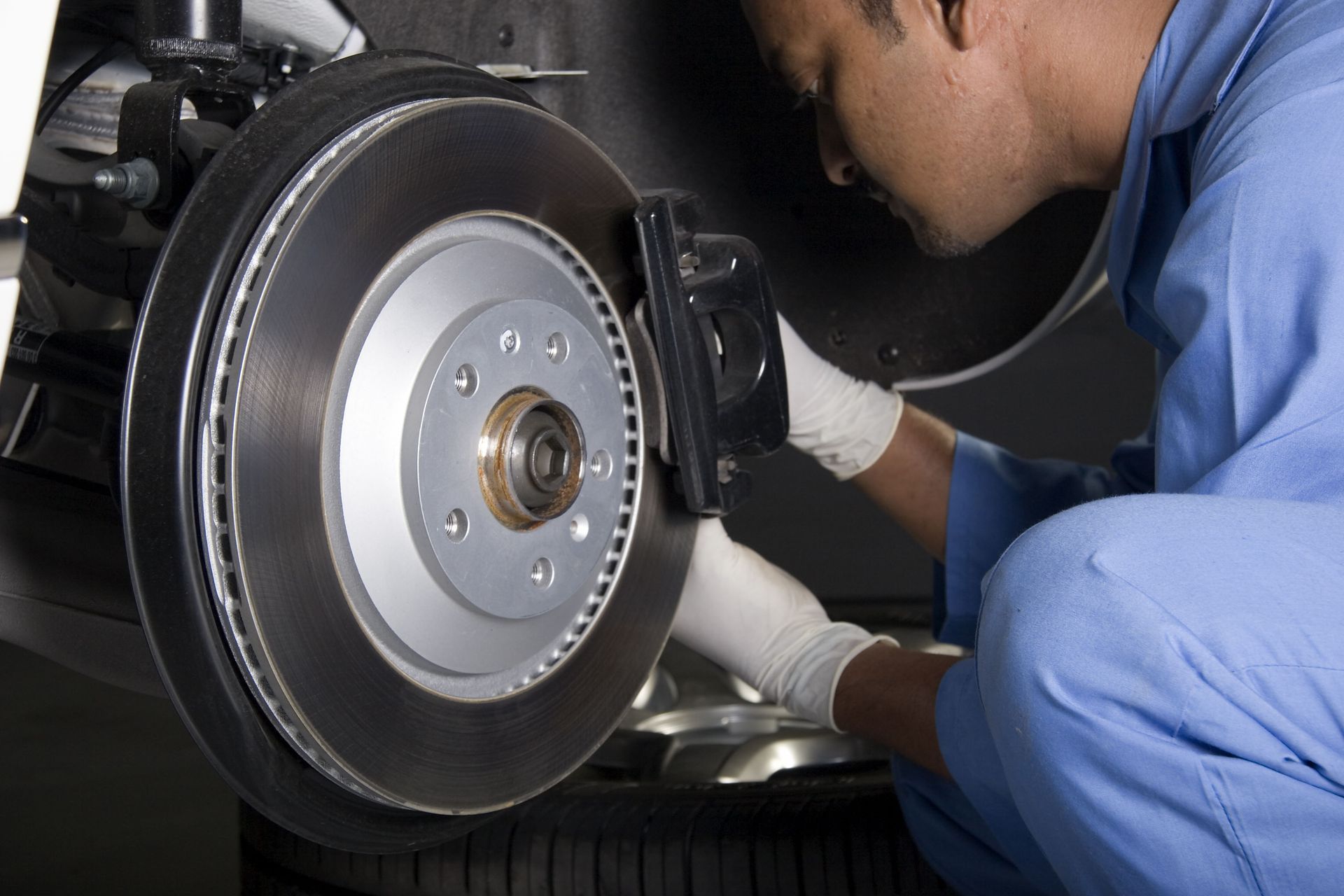
Feeling unexpected vibrations, pulsation through the pedal, or shuddering across the steering wheel during high-speed deceleration signals uneven surface wear across metal discs. Metal rotors must maintain perfectly smooth, flat parallel surfaces for friction pads to clamp down evenly. Over time, extreme thermal stress, aggressive mountain driving, or improper lug nut torque can cause rotors to develop uneven thickness variations or subtle lateral runout, commonly referred to as rotor warping.
When pads press against a warped or uneven disc, the hydraulic pressure pulses backward through the fluid lines, creating a rhythmic vibration felt directly underfoot and through the steering column. These vibrations reduce tire traction during hard stops and accelerate wear across suspension bushings, wheel bearings, and steering linkages. Contracting experienced mechanics to perform brake repairs restores flat rotor surfaces through precision resurfacing or complete disc replacement, eliminating uncomfortable wheel shudders and ensuring smooth, consistent stopping power.
Analyzing Market Performance and Identifying Advanced Disc Systems
Analyzing modern automotive brake market trends highlights the industry-wide transition toward high-performance disc systems designed to deliver superior heat dissipation, moisture shedding, and reliable stopping power. Older vehicle designs frequently utilized enclosed drum mechanisms across rear wheels, which trapped internal heat and dust, leading to gradual brake fade during heavy usage. Modern vehicles predominantly feature open-air disc assemblies across all four wheels, maximizing air cooling and water evacuation during wet weather conditions.
Industry market research confirms the overwhelming global preference for advanced disc system designs across passenger vehicles. According to Mordor Intelligence, disc brakes make up more than 71% of the traditional brake market, largely because of their superior performance. Relying on professional technicians for routine brake repairs guarantees that your modern disc assemblies receive high-grade ceramic or semi-metallic friction pads tailored to match factory performance standards.
Observing Soft Sponge-Like Pedals and Fluid Pressure Drops
Observing a soft, spongy pedal feel or noticing that the pedal sinks all the way to the floorboard indicates a dangerous loss of hydraulic line pressure. Hydraulic systems operate on the principle that fluid cannot be compressed; pressing the pedal forces fluid through sealed lines to actuate caliper pistons. If air enters the hydraulic lines, or if internal master cylinder seals fail, the pedal feels mushy and unresisting because trapped air pockets compress under foot pressure.
Furthermore, a sinking pedal can stem from active hydraulic fluid leaks along rusted steel brake lines, flexible rubber hoses, or leaking caliper piston seals. Low hydraulic fluid levels reduce clamping force drastically and risk total brake failure while driving. Scheduling comprehensive brake repairs enables certified technicians to trace hydraulic leaks, replace deteriorated lines, flush contaminated fluid, and bleed trapped air pockets to restore firm, instantaneous pedal response.
Maintaining a healthy, responsive braking system is fundamental to protecting yourself, your passengers, and fellow motorists on the road. From early auditory squeals and severe metal grinding to steering wheel vibrations, spongy pedal feel, vehicle pulling, and dashboard warnings, your automobile continuously communicates its mechanical needs. Ignoring minor wear indicators allows simple pad replacements to escalate into severe rotor damage, caliper failure, and dangerous hydraulic fluid pressure loss. Modern disc assemblies offer exceptional performance and heat management, but their longevity depends entirely on timely inspections and high-quality maintenance components.
At Bion's Full Service Auto Care, we are deeply committed to protecting your driving safety, maintaining your vehicle's mechanical reliability, and delivering superior automotive services through master craftsmanship, state-of-the-art diagnostic equipment, and dedicated customer care. Our team of certified automotive technicians brings extensive industry expertise, digital hydraulic testing tools, precision rotor resurfacing machinery, and meticulous attention to detail to every pad replacement, rotor installation, hydraulic line flush, caliper rebuild, master cylinder service, and professional brake repairs project we execute across our community. We take immense pride in evaluating your unique vehicle braking performance, analyzing pad thickness levels, inspecting hydraulic line integrity, and serving as your trusted automotive advocate to bring total physical security, firm pedal responsiveness, and preserved vehicle equity to your automobile. Furthermore, our facility prioritizes clear communication, transparent written estimates, clean shop management, and exceptional service performance from initial road test diagnosis through final quality inspection. We carefully examine every friction surface, caliper pin, fluid reservoir, and sensor connection to guarantee maximum stopping power, factory safety compliance, and complete vehicle owner satisfaction. Contact us today to schedule your comprehensive brake inspection and discover the true value of working with dedicated local auto care specialists.

Share On: